
Ida Spotlight: Felicity Chen & ‘Persona’
Words by Eirian Soar
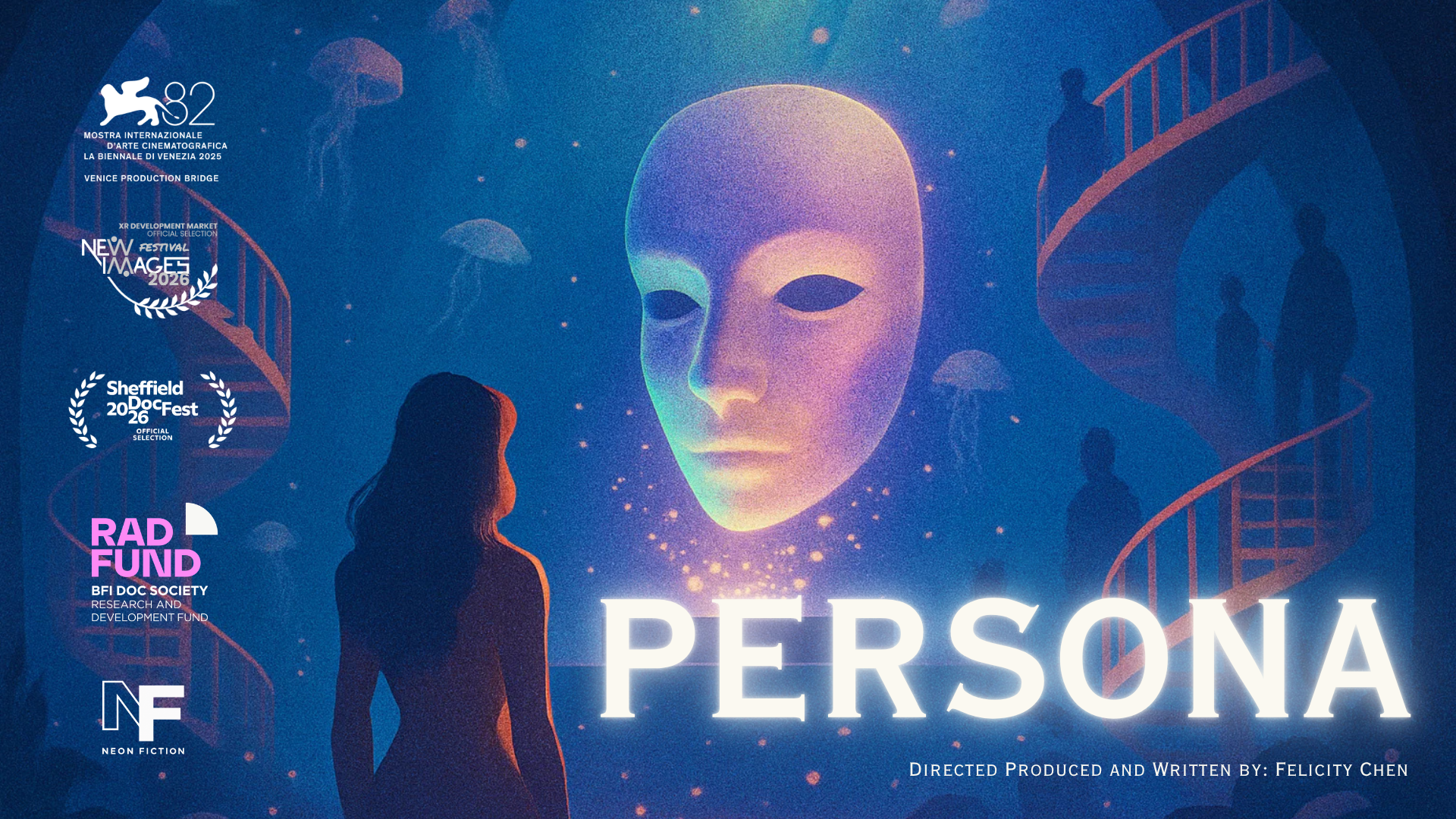
In this new spotlight series, we explore creative practitioners whose work seeks to enhance community and belonging for marginalised groups, presenting alternative, hopeful narratives for how technology can be a force for good.
We begin with director and producer Felicity Chen and her virtual and mixed reality documentary series, Persona. The project follows three individuals whose experiences of rigid gender norms and neurodivergence led them to discover the transformative potential of virtual bodies and social VR. Its first chapter, Phantom Touch, follows FriendlyGhost, an autistic woman in the Netherlands who found safety, control and belonging in a virtual world.
The second chapter, Becoming Me, explores how queer but closeted individuals use avatars to move closer to their authentic selves when physical life restricts their identity or expression.
What inspired Persona?
Chen began her creative career in film studies, where she became acutely aware of how negative portrayals of women in the media reinforced expectations about how women ‘should’ behave. Moving into games, they found that virtual spaces imagined as free and liberating could reproduce the same stereotypes and power structures.
Chen reported often using her lifelong love of fictional characters, games, anime, virtual idols and digital worlds, as a way to imagine alternate realities and versions of the self. Chen was not alone in this; many others often use avatars, role-play and virtual communities to find confidence, freedom and identities that can be constrained in everyday life.
While researching women’s experiences in virtual spaces, Chen met FriendlyGhost, HollowBrain and Ramona. Those encounters redirected the project towards identity, belonging and the liberation, grief and anger that can accompany unmasking. Thanks to the collaboration of these social VR users, their accounts shaped Persona’s narrative, visual language and mechanics, while their trust enabled Chen to translate intimate experiences into spatial, embodied forms.
What were your goals in creating Persona?
Chen created Persona as a dreamy, liberating space where people could uncover suppressed parts of themselves and feel less alone. “What I ultimately wanted was a space of possibility, where transformation does not mean becoming someone else. It means becoming more fully yourself.”
By carrying stories of hope, healing and connection from social VR into physical life, Chen wants FriendlyGhost, HollowBrain, Ramona and others with alternate lives online to know that their experiences are “meaningful and beautiful”, rather than temporary or unreal once the headset comes off.
Persona does not frame virtual worlds as an escape. It creates a meeting point between online communities and wider society, asking how confidence and self-knowledge discovered online might support lasting change.
Gender, masking and identity in virtual spaces
Chen’s research began with virtual idols and VTubers: female performers who bring digital characters to life through motion capture and voice acting. These personas open up new creative possibilities, taking shape in real time through the performer’s choices, the audience’s interpretations, and the performer’s negotiation with the technology. Yet they also introduce new constraints. Avatars can reshape how bodies and identities are perceived, while predominantly male audiences can reproduce misogynistic expectations, including demands for artificial and reproduced femininity based on media biases.
This interest led Chen into research on social VR worlds, such as VRChat, Decentraland and Resonite, where role-play and avatar-based performance seemed to offer a more immediate, self-directed form of expression, closer to a personally shaped identity than a performance geared towards audience and market expectations. Embodying her favourite virtual character as an avatar felt “fascinating and scary in its own right”. As she spent time world-hopping and talking to strangers, she explored the connections and differences between their offline identities and online personas. It was through these encounters that she met FriendlyGhost, an autistic woman whose experiences brought another dimension of masking into focus and changed the direction of Persona.
FriendlyGhost’s story offers an intimate account of what being autistic and masking feel like for her. She speaks only for herself, but her experiences may resonate with others who have felt pressure to conceal or even alter parts of themselves to meet social expectations. For some, that connection may open up questions about their own possible neurodivergence; for others, it may bring a sense of closeness to someone whose experiences they once assumed were far removed from their own.
As a queer woman who grew up rarely finding communities she belonged to and female characters she could identify with, Chen recognised something of herself in FriendlyGhost’s experience. “For the first time in my life,” she explains, “I began to seriously consider that I might be neurodivergent”, and a female tester, experiencing an early prototype, also raised a similar question. Masking and conforming may particularly resonate with neurodivergent and queer people, but also with anyone who has concealed or reshaped themselves around gender, race, migration or culture. Virtual spaces can offer room to stop hiding, re-examine and reconnect with their surroundings, because of how it deconstructs long-existing, rigid rules in reality that are labelled as “normal”.
Chen’s research led to her connection with Trans Academy, one of social VR’s largest queer and trans communities and later a project partner. It was within this community—a safe space for queer and trans people worldwide—that she met HollowBrain. HollowBrain, a trans man born into a culture silencing his bodily experience and legally forbidding his identity, described the tension between his identity and others’ readings of his physical body.
The role of the virtual ‘body’
Persona treats the body not as fixed, but as “a state of becoming” that can become “a curse, a weapon, a shield or an honest representation of the self”. Chen sees embodiment as contradictory: it can anchor identity while creating alienation. When appearance, voice, gender, race or physical features determine how others respond before a person can define themselves, being continually read through a given body can become “a kind of everyday horror”.
Virtual worlds can interrupt these assumptions. Chen has met men with deep voices who choose cute anime-girl avatars and women who appear as a 2D photo of an online meme,, animals or even “a piece of butter” to escape expectations attached to female bodies. For Ramona and HollowBrain, the gap between physical and virtual embodiment changes their relationships and place in the world. An avatar can alter the authority, safety, vulnerability or freedom afforded to someone, although “the person inside stays the same”. Chen therefore views avatars as “tools for self-recognition”, not fictional characters or instruments of escape. Persona creates enough distance to examine how the body has shaped a life and enough freedom to imagine a different relationship with it.
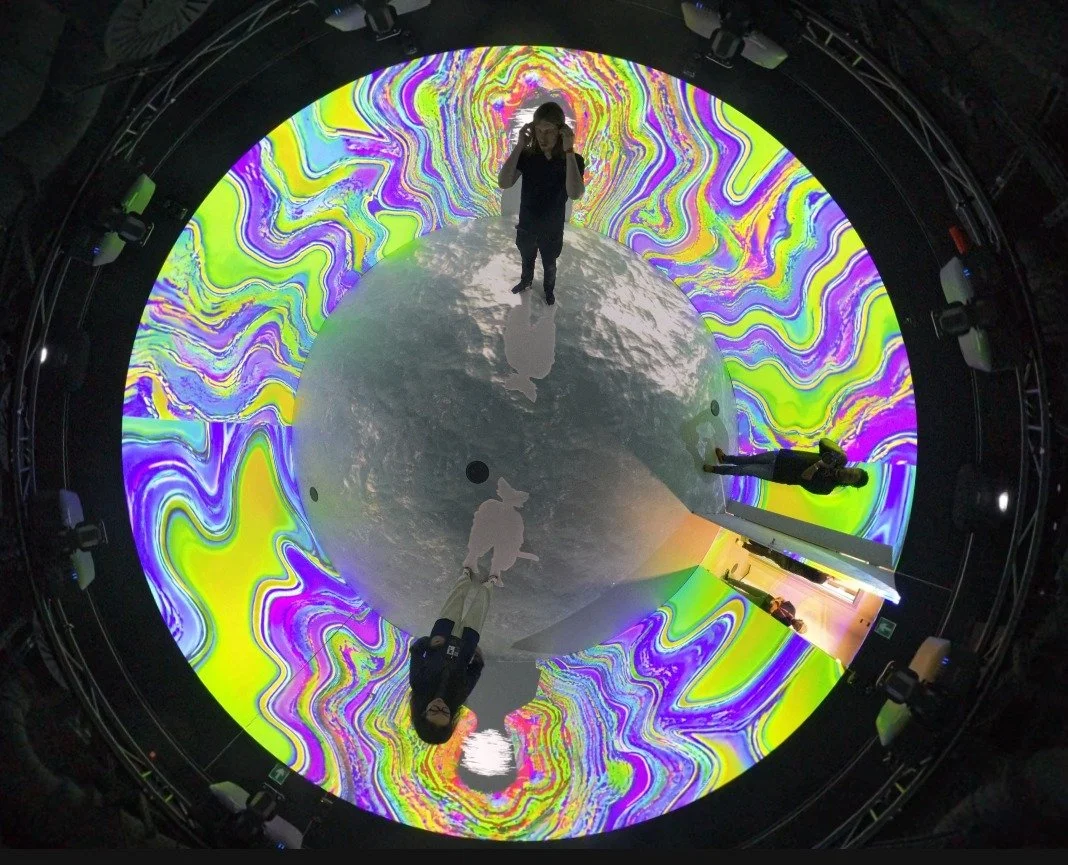
In the experience, Persona combines documentary capture of existing social VR worlds with subjective reconstructions of its participants’ memories and perceptions. Through immersive in-game filming and spatial capture, Chen records the places they inhabit and how they express themselves through their avatars’ gestures, movements and interactions. Alongside these recordings, she builds environments in game engines that explore the less conscious, less easily articulated aspects of their experiences. Guided by the participants’ own narration, these sequences use space, scale and bodily presence to convey the emotional weight of a memory. Moving between recorded encounters and imagined environments, audiences are invited to consider their own relationship with masking and the possibilities of transformation through a digital body.
One sequence draws on HollowBrain’s account of the tension between his identity and how others perceive his physical body. Chen interpreted this through an interaction in which the audience member’s virtual body gradually shrinks until it disappears, conveying a diminishing sense of presence and agency. When HollowBrain reviewed the design, he asked: “How did you know? Did you read my mind? I never told you that.” He recognised in the interaction a feeling he had not put into words. That recognition cannot determine how others will respond, but it suggests that the design may offer audiences a way into his inner experience. The exchange points to a particular strength of interaction and immersive storytelling in documentary: giving unspoken feelings a form that others can begin to experience.
Protecting virtual liberation in social VR
Although Persona presents virtual spaces as sources of liberation and belonging, Chen stresses that “social VR, like any online spaces, is not a safe space by default”. People build, populate and govern these worlds, so beauty, connection, as well as harassment, discrimination, exclusion and unequal power follow them online. Even FriendlyGhost, HollowBrain and Ramona remain vulnerable, and their temporal freedom experienced in Social VR does not necessarily reflect their full experience throughout, and reality experience in physical circumstances.
Protecting that freedom requires practical tools and collective care. Private instances, mute and block functions and trusted relationships help individuals feel safer; codes of conduct, responsible moderation and shared decision-making help communities respond to harm. These protections allow people to experiment and communicate “without constantly anticipating judgement or attack”. Yet safety cannot remain a virtual responsibility. Physical life must also support people to live, work and create without serious consequences for who they are. Chen rejects the idea that VRChat experiences form “a temporary fever dream contained within one platform”. From “Second Life”, “AltSpace” to “The Sims”, humans’ pursuit of the virtual simulation/extension of life is an ongoing practice, and will become more fascinating and scarily close to reality with the development of AI world models and technologies like Gaussian Splatting. Recognising virtual and physical realities together, she argues, “greatly expands how we imagine a human life and spaces of connecting and becoming”.
Can immersive art create lasting change?
Chen believes art can change minds, but its impact depends on “how and when someone meets a work, who they are and what happens afterwards”. Immersion may create empathy in the moment; lasting change requires sustained interest, repeated encounters, conversation and opportunities to act. Art does not automatically drive social change, but it can become “an incubator for reflection, discussion and action”.
Social VR lets people test identities and behaviours at relatively low cost and with less immediate risk. Immersion, interactivity, spatial presence and other people make audiences feel they are participating rather than watching, so alternative ways of living and relating can register more bodily and immediately. Turning that feeling into change requires facilitation, education, community partnerships and repeated engagement beyond the artwork. Chen argues that artists must share this responsibility with producers, educators, researchers, community organisers and impact specialists, confronting the tension between social-impact strategies and artistic integrity rather than “assuming empathy alone will lead to change”.
Closing reflection
Persona uses the virtual body not to escape physical embodiment, but to expose how bodies are read and granted or denied safety, authority and belonging. An avatar can create distance from this, yet Chen refuses to leave that liberation inside the headset. The project asks what physical society might learn from the identities, relationships and communities built online. Whilst immersion can make that question felt, the feeling alone does not create change - its lasting potential comes in what follows: reflection, conversation, collective care and opportunities to act.
Keep up with Felicity’s Work:
Persona: Phantom Touch is currently planning its showcase at Venice Immersive: Biennale College in September 2027.
To keep updated on upcoming showcases or reach out for partnerships, visit www.felicitychen.com.